 language
 Deutsch
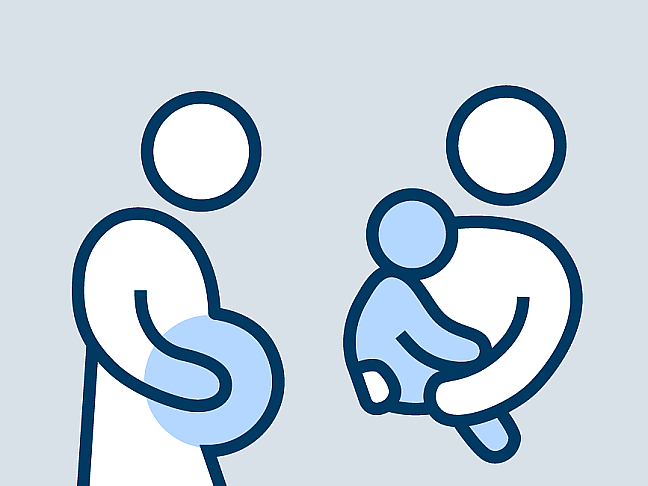
A pregnant woman's body changes during pregnancy. In order to provide the unborn baby with optimal care, the pregnant woman's blood volume increases and the cardiovascular system is put under greater strain. Heat puts additional strain on the circulation, as the body reacts to heat by increasing blood flow to the skin. This is how the body releases excess heat. This can lead to low blood pressure and dizziness in pregnant women. Another consequence is swollen legs and feet.
Breathing may also be restricted because the lungs have less space due to the baby.
Heat causes the already higher fluid requirements during pregnancy to increase even further. At the same time, pregnant women sweat more. If this fluid loss is not compensated for in time by drinking enough fluids, it can easily lead to dehydration and electrolyte loss.

In addition to our general tips, pregnant women can protect themselves from heat in the following ways:
Babies, and newborns in particular, are not yet fully able to regulate their body temperature and keep it constant. The ratio of body surface area to body weight is greater in small children than in adults. For this reason, they lose fluid more quickly through sweating and overheat more quickly. In addition, they often have little or no thirst, are not yet able to express their thirst and forget to drink while playing.
You can recognise dehydration in small children by the following signs:
Even slight overheating can lead to irritability, skin redness, lethargy or fever. In the worst case, circulatory collapse or heat stroke can occur.
Particular attention must be paid to sun exposure in babies and young children. Sunlight contains UV radiation, to which the skin is particularly sensitive. Babies' skin is still very thin and has no natural sun protection. If the skin is exposed to too much UV radiation during childhood, the risk of developing skin cancer later in life increases. That is why prevention is important.
The risk of sunstroke is many times higher in babies and young children than in adults.
In addition to our general tips, you can protect babies and toddlers from the heat as follows: